
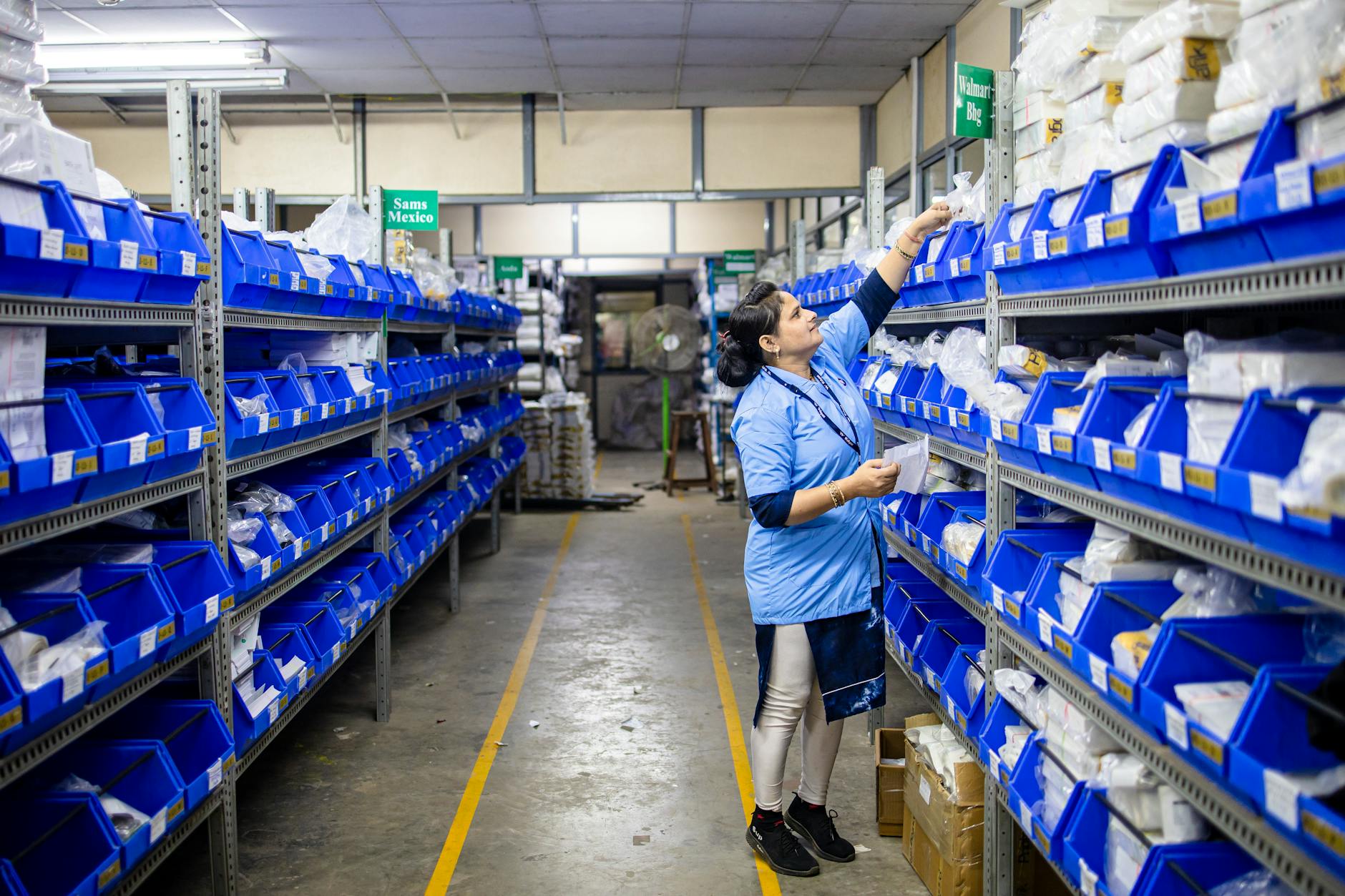
Ever checked your WooCommerce dashboard and realized you’re out of stock on your best seller? That sinking feeling when a customer emails asking when it’ll be back, and you have no idea because you’re still managing inventory in spreadsheets?
We’ve been there. And it costs real money.
In this case study, I’m going to walk you through exactly how we cut stockouts by 40% in just three months using AI inventory forecasting. No fluff, no theory — just the numbers, the strategy, and the tools that made it happen.
The Problem: Spreadsheet Inventory Management Was Killing Us
Before we made the switch, our inventory process looked like this:
Immersa Builder | The Ultimate Guided WordPress Theme with Built-In AI Content Tools
Immersa Builder is the most guided WordPress starter theme designed to get your website live in minutes, not weeks. Featuring a foolproof 9-step setup wizard, professionally crafted starter sites, and…
- Every Monday, someone exported WooCommerce orders from the past week.
- They manually cross-referenced current stock levels against a master spreadsheet.
- They guessed reorder quantities based on gut feel and “what we ordered last time.”
- Purchase orders were emailed to suppliers with no tracking.
It was slow, error-prone, and reactive. By the time we noticed a product was running low, it was often too late — the supplier lead time meant a two-week stockout.
The Real Cost of Stockouts
Stockouts don’t just mean lost sales. They mean:
- Lost revenue — customers who can’t buy go elsewhere.
- Damaged trust — “I’ll wait” becomes “I found it cheaper on Amazon.”
- Wasted ad spend — you paid to get them to your site, but they left empty-handed.
- Excess carrying costs — you over-order on slow movers to compensate for poor forecasting.
We calculated that stockouts were costing us roughly $4,200 per month in lost revenue. That’s over $50,000 a year — just from running out of stock on a handful of products.
Why We Chose AI Inventory Forecasting
We looked at several options. Spreadsheets weren’t working. Manual reorder points were always wrong because seasonal spikes threw everything off. We needed something that could:
- Analyze historical sales data automatically
- Account for seasonality and trends
- Calculate dynamic reorder points based on real sales velocity and supplier lead times
- Send alerts before we hit critical stock levels
- Integrate directly with WooCommerce — no middleware, no monthly SaaS fees
That’s when we discovered StockOracle AI. It’s a WooCommerce-native inventory plugin that uses AI demand forecasting (OpenAI or Anthropic) to predict future sales and calculate optimal reorder points. And because it’s self-hosted, our data stays on our server — no third-party cloud dependency.
Why Not a Spreadsheet or a SaaS Tool?
We considered TradeGecko (now QuickBooks Commerce) at $39/month and Katana at $99/month. Both are solid, but they’re SaaS — monthly fees, data on their servers, and limited WooCommerce integration without Zapier. StockOracle AI is a one-time plugin purchase with an annual license at $49/month or $1,499 lifetime. For a store doing a few hundred orders a month, the math was clear.
How We Implemented AI Inventory Forecasting
Here’s the step-by-step process we followed. If you’re considering AI inventory forecasting for your WooCommerce store, this is exactly what we did.
Step 1: Clean Up Our Product Catalog
Before you can forecast accurately, you need clean data. We spent a weekend doing the following:
- Removed discontinued products
- Standardized product names and SKUs
- Ensured all products had accurate stock quantities
- Set proper lead times for each supplier in StockOracle AI’s Supplier CRM
This was tedious but essential. Garbage in, garbage out.
Step 2: Install and Configure StockOracle AI
We installed the free version of StockOracle AI from WordPress.org first. It immediately started analyzing our WooCommerce order history and displaying an Inventory Health Score — an A-F grade based on stockout rates, low stock levels, and sales velocity coverage.
Our score was a D. That stung, but it was honest feedback.
Step 3: Enable AI Demand Forecasting (Pro Feature)
After a week of testing the free version, we upgraded to Pro to unlock the AI forecasting module. We brought our own OpenAI API key (BYOK model — no data sent to third parties except anonymized sales numbers).
StockOracle AI analyzed 12 months of historical sales data and calculated:
- 30-day demand projections for every product
- Daily average sales velocity with trend direction (up, down, stable)
- Suggested restock quantities based on lead times and safety stock buffers
It also classified our inventory using ABC analysis — automatically identifying the 20% of products (A-class) that generated 80% of our revenue. These got the most attention.
Step 4: Set Up Dynamic Reorder Alerts
This was the game-changer. Instead of checking stock levels manually, StockOracle AI started sending us categorized alerts:
- Critical — product will stock out within 3 days based on current velocity
- Warning — product will stock out within 7 days
- Info — product is getting low but not urgent yet
We set up weekly email digests so the entire team got a summary every Monday morning. No more surprises.
Step 5: Automate Purchase Orders
Once we trusted the alerts, we started using StockOracle AI’s built-in purchase order system. When an alert hit, we could generate a professional PDF purchase order with one click, email it directly to the supplier, and track its status (draft, sent, received, partially received, completed).
This eliminated the “did I send that PO?” anxiety entirely.
The Results: 40% Fewer Stockouts in 90 Days
Three months after implementing AI inventory forecasting, here’s what we saw:
| Metric | Before StockOracle AI | After StockOracle AI | Improvement |
|---|---|---|---|
| Stockout rate (monthly) | 12.4% | 7.5% | 40% reduction |
| Low stock rate | 22% | 14% | 36% reduction |
| Dead stock (non-moving inventory) | 8% of catalog | 4% of catalog | 50% reduction |
| Inventory turnover ratio | 3.2x per year | 4.8x per year | 50% increase |
| Average days out of stock per SKU | 14 days | 8 days | 43% reduction |
But the most important number: recovered revenue from prevented stockouts was approximately $1,680 per month. That’s $20,160 annually — from a plugin that costs $49/month.
Real Example: Our Best-Selling Widget
Let me give you a concrete example. We sell a widget that accounts for about 15% of our total revenue. Before AI forecasting, we would order 200 units every 6 weeks based on “that felt about right.” We’d stock out for 5-7 days before the next order arrived.
StockOracle AI analyzed the sales data and found that the widget had a strong seasonal spike in Q4 (holiday demand) and a smaller spike in spring. The AI model predicted 30-day demand of 180 units in November versus 110 in July. Our old “order 200 every 6 weeks” approach meant we were overstocked in summer (tying up cash) and understocked in winter (losing sales).
Now we order dynamically: 180 units in November, 110 in July. The reorder alert fires automatically when stock drops below the calculated reorder point. Result: zero stockouts on this product for 4 months straight, and we reduced our average inventory holding cost by 22%.
What We Learned About AI Inventory Forecasting
If you’re thinking about implementing AI inventory forecasting for your WooCommerce store, here are the biggest lessons we learned:
Start with Clean Data
AI is only as good as the data you feed it. If your product catalog has duplicates, missing SKUs, or inaccurate stock counts, the forecasts will be wrong. Spend a weekend cleaning up your catalog before you start.
Don’t Trust AI Blindly at First
For the first month, we ran StockOracle AI’s forecasts alongside our existing manual process. We compared the AI’s predictions against what actually happened. After a few weeks, we saw that the AI was consistently more accurate — especially on products with seasonal patterns we hadn’t noticed.
Use ABC Classification to Prioritize
You don’t need perfect forecasts for every product. Focus on your A-class items (the 20% that drive 80% of revenue) and get those right. For C-class items, a rough estimate is fine. StockOracle AI does this automatically, but you can also manually adjust classifications.
Set Up Alerts, Then Automate Purchase Orders
Don’t jump straight to automated purchase orders. Start with alerts, learn to trust the system, then gradually automate. We spent 6 weeks in “alert mode” before we started generating POs directly from the plugin.
How StockOracle AI Compares to Other Inventory Tools
We evaluated several options before choosing StockOracle AI. Here’s how they stack up:
| Tool | Pricing | AI Forecasting | Self-Hosted | WooCommerce Native |
|---|---|---|---|---|
| StockOracle AI | $49/mo or $1,499 lifetime | Yes (OpenAI/Anthropic) | Yes | Yes |
| Katana | $99/mo | Basic | No (SaaS) | Limited (Zapier) |
| TradeGecko / QuickBooks Commerce | $39/mo | No | No (SaaS) | Limited (Zapier) |
| ATUM Inventory | Free (basic) | No | Yes | Yes |
The key differentiator for us was self-hosted + WooCommerce native. We didn’t want another SaaS subscription with monthly fees and data on someone else’s server. StockOracle AI lives inside our WordPress dashboard, reads directly from WooCommerce tables, and never sends customer data to third parties.
What’s Next: Cash Flow Projections and Multi-Warehouse
We’re currently exploring two Pro features we haven’t fully implemented yet:
- Cash flow projections — StockOracle AI can forecast inventory expenditure 3-6 months out, which would help us plan for seasonal purchasing without cash crunches.
- Multi-warehouse support — We’re considering a second fulfillment center, and the ability to manage stock levels per location independently would be huge.
We’ll report back once we have numbers on those.
Final Verdict: Is AI Inventory Forecasting Worth It?
Absolutely. If you’re managing inventory manually in spreadsheets, you’re leaving money on the table. The ROI on StockOracle AI was immediate — $1,680/month in recovered revenue from prevented stockouts, plus the time savings from not manually calculating reorder points every week.
But more than that, the peace of mind is invaluable. No more waking up at 3 AM wondering if you remembered to order more widgets. The system handles it.
Try It Yourself
If you want to see your own Inventory Health Score, start with the free version of StockOracle AI on WordPress.org. It takes 10 minutes to install and immediately starts analyzing your WooCommerce data. No credit card required.
When you’re ready for AI forecasting, purchase orders, and multi-warehouse support, the Pro version is $49/month or $1,499 lifetime. For a store doing a few hundred orders a month, it pays for itself in the first month.
Stop guessing. Start forecasting.